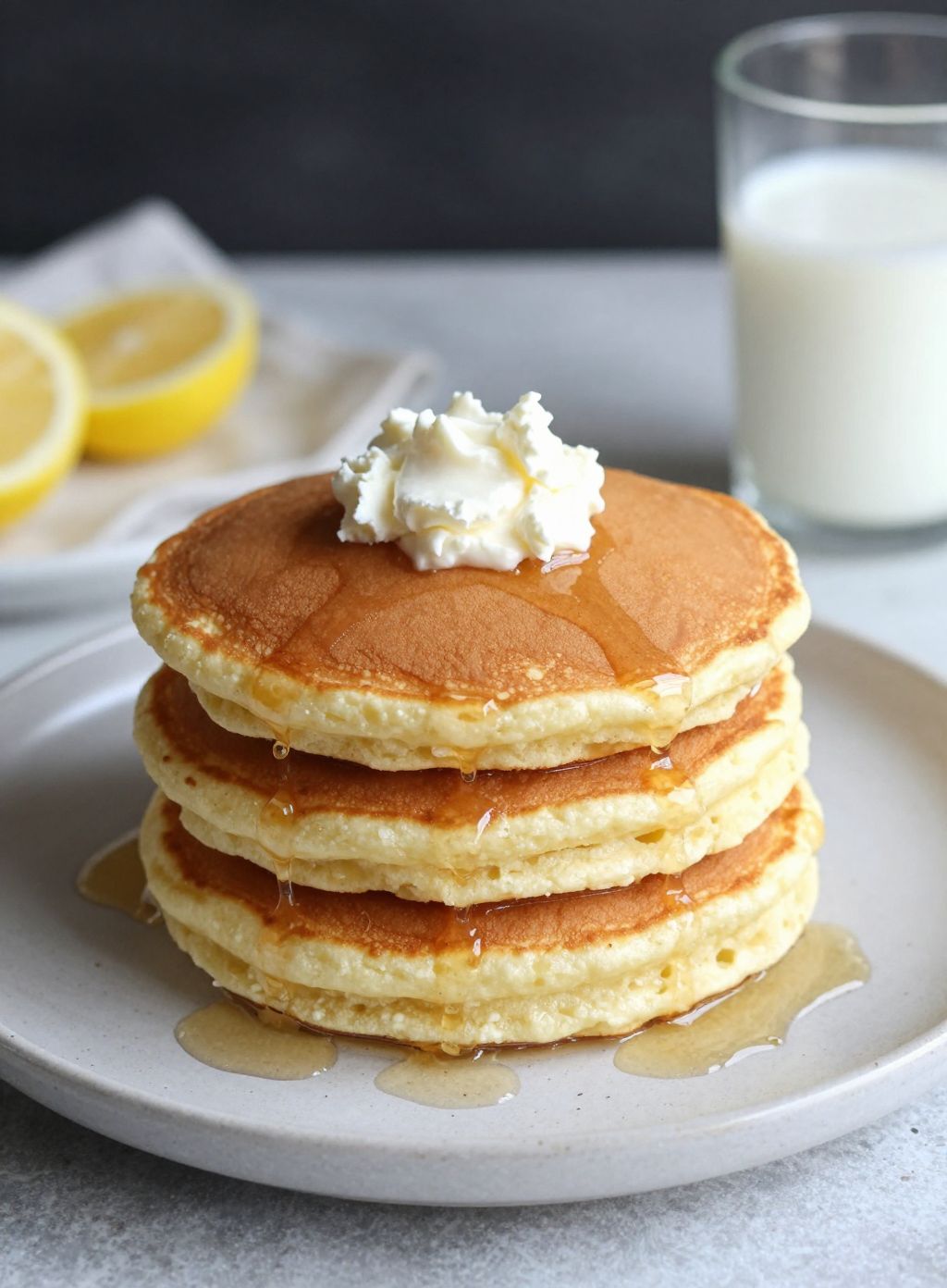
There is a specific kind of morning—usually a slow Saturday where the light hits the kitchen floor just right—that calls for something more than a bowl of cereal or a piece of toast. It calls for the “Grand Dame” of the breakfast table: The Ricotta Pancake.
If you’ve only ever had standard buttermilk pancakes, you are in for a revelation. While buttermilk pancakes are hearty and nostalgic, Ricotta Pancakes are sophisticated, airy, and almost custard-like in the center. They are the pancakes you find at $30-a-plate brunch spots in Manhattan or Sydney, but today, we’re bringing that luxury straight to your cast-iron skillet.
The Science of “Cloud-Like” Texture
What makes this recipe different from every other pancake on the internet? It’s all about the moisture-to-air ratio.
- The Ricotta Fat Solids: Unlike milk, which is mostly water, ricotta is packed with fat solids and proteins. These act as “tenderizers” for the flour’s gluten. The result? A pancake that is nearly impossible to make “tough.”
- Chemical vs. Mechanical Leavening: Most recipes rely solely on baking powder (chemical). We use a “Double Lift” method. We use chemical leaveners for the initial rise, but we also use Mechanical Leavening—the act of physically folding air into the batter via whipped egg whites.
- The pH Balance: The slight acidity of the ricotta, combined with fresh lemon juice, creates a “vigorous” reaction with the baking soda. This creates thousands of tiny carbon dioxide bubbles that get trapped in the batter, giving you that signature height.
Ingredient Deep-Dive: Quality is Non-Negotiable
When a recipe has only a few components, each one must pull its weight.
- The Ricotta: Always use Whole Milk Ricotta. If you can find “Galbani” or a local artisanal brand that is thick and creamy rather than watery, your pancakes will be significantly better. If your ricotta has a lot of liquid (whey) in the container, strain it through a paper towel for 5 minutes before using.
- The Flour: All-purpose flour is the gold standard here. We want just enough gluten to hold the “cloud” together, but not so much that it becomes bread-like.
- The Aromatics: We use a “Triple Citrus” approach—lemon zest for the scent, lemon juice for the lift, and pure vanilla bean paste for that floral, high-end finish.
📖 The Master Recipe: Lemon Ricotta Clouds
| Prep Time | Cook Time | Technique | Yields |
| 20 Mins | 15 Mins | Folded Egg-Whites | 10 Large Pancakes |
The Ingredients
The Dry Components
- 1 ½ cups (190g) All-purpose flour, sifted
- 3 tbsp Granulated sugar
- 1 ½ tsp Baking powder
- ½ tsp Baking soda
- ½ tsp Kosher salt
The Rich Custard Base
- 1 cup (250g) Whole milk ricotta cheese (strained if watery)
- ¾ cup Whole milk (room temperature)
- 2 Large eggs, separated
- 1 tbsp Fresh lemon zest
- 1 tbsp Fresh lemon juice
- 1 tsp Vanilla bean paste (or extract)
- 3 tbsp Unsalted butter, melted and cooled
Step-by-Step Culinary Instructions
1. The Sifted Foundation
In a large bowl, whisk together your flour, sugar, baking powder, baking soda, and salt. Pro Tip: Sifting your flour isn’t just about removing lumps; it’s about aerating the particles so they don’t clump when they hit the wet ingredients.
2. Building the Flavor Base
In a medium bowl, whisk the ricotta, milk, egg yolks, vanilla, lemon zest, and lemon juice. Once smooth, slowly stream in the melted butter while whisking. This creates an emulsion that ensures every bite is rich.
3. The “Peak” Performance
In a separate, perfectly clean metal or glass bowl, beat your egg whites. Start slow, then increase speed until soft peaks form. If you pull the whisk up, the “mountain” should gently curl over at the top. Do not overbeat until they are dry and crumbly!
4. The Gentle Fold
Create a well in the dry ingredients and pour in the ricotta mixture. Stir with a spatula until about 80% combined. Now, gently fold in the egg whites in two additions. Use a “cut and fold” motion—cut through the center, scrape the bottom, and fold over. Stop while you still see a few streaks of white.
5. The Griddle Strategy
Heat your skillet over medium-low. These pancakes have a high sugar and protein content; if the pan is too hot, they will burn before the center sets. Use a 1/3 cup measure to scoop the batter.
6. The “Golden Window”
Cook for 3–4 minutes on the first side. You won’t see as many bubbles as a normal pancake; instead, look for the edges to look “matte” and opaque. Flip gently—these are delicate! Cook for another 2 minutes until golden.
💡 Troubleshooting & Expert Tips
- Why are my pancakes flat? You likely over-mixed the batter or waited too long to cook it after mixing. The “lift” from the egg whites and baking soda starts to deflate after about 15 minutes.
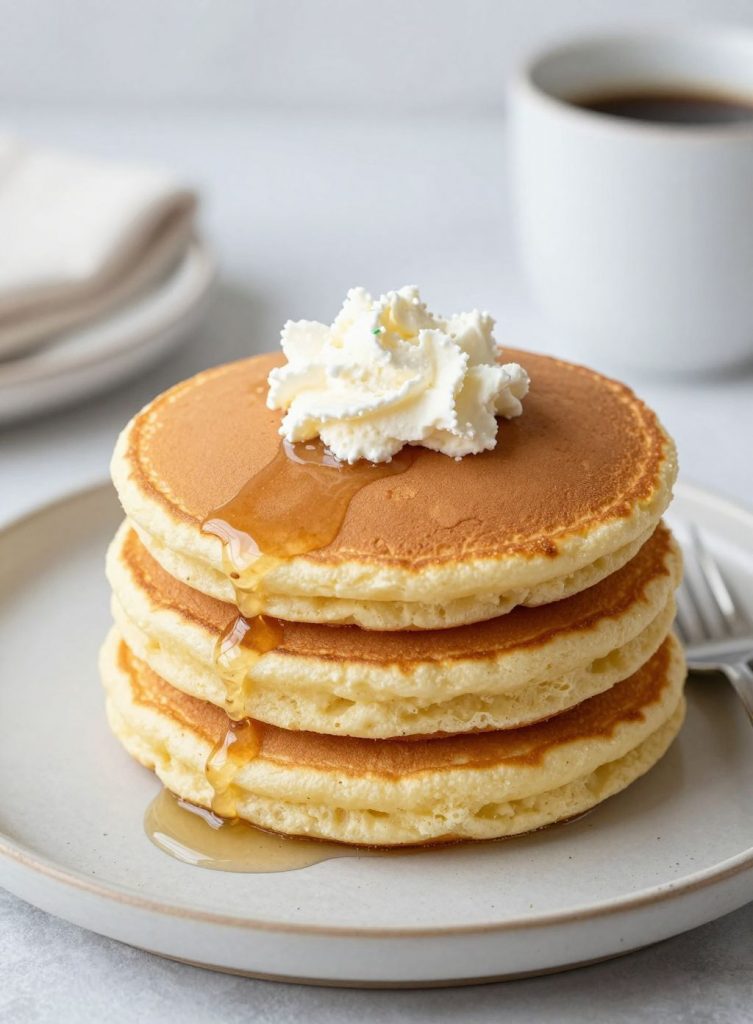
- The “No-Squish” Rule: When you flip a ricotta pancake, do not press it down with the spatula. You will crush the air pockets and end up with a dense disc.
- Keeping them Warm: Do not stack them while waiting to serve; the steam will make them soggy. Place them in a single layer on a wire rack in a 200°F (95°C) oven.
Final Thoughts: The Art of the Morning
A great recipe is a map, but the journey is yours. These Ricotta Pancakes are an invitation to slow down. Serve them with a simple blueberry compote, a dusting of powdered sugar, and perhaps a side of thick-cut peppered bacon to balance the sweetness.